
Humans v.s. AI: When Imagination Becomes Our Superpower

Faced with the meteoric rise of artificial intelligence in digital creation, a disturbing question arises: what will remain for humans to produce when every image and word can be generated with precision surpassing our natural abilities?
This question, inspired by Emad Mostaque, founder of Stability AI, challenges us about the profound meaning of our role as creators in a world reshaped by technology. "When AI can generate every pixel and word better than us, what are we going to produce?" – a question that resonates with particular urgency in 2025.
Human Creativity: Much More Than Technical Performance
"Imagination is more important than knowledge. Knowledge is limited. Imagination encircles the world." — Albert Einstein
AI already surpasses humans on standard creativity tests and can generate stunning artistic or literary works. Yet true human creativity is not limited to technical production.
Einstein himself, speaking about his discovery of relativity, prioritized imagination over mere accumulation of knowledge. Modern AI possesses a nearly unlimited knowledge base, but can it truly imagine in the way Einstein meant?
What fundamentally distinguishes us is our ability to:
Imagine beyond the limits of the known (what Einstein valued in his scientific approach)
Give lived meaning and intention
Express authentic emotions
Connect inspiration and personal experience
Create works that touch deeply through their authenticity
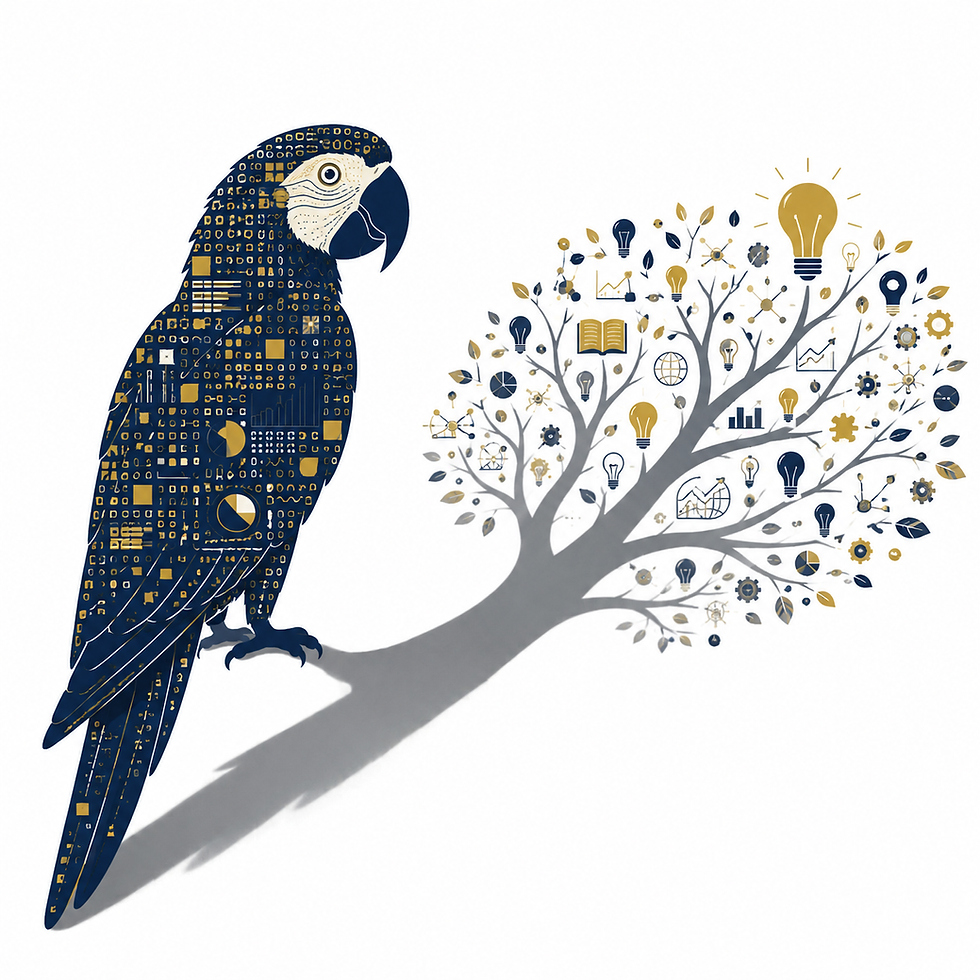
AI recombines, amplifies, and reinvents with formidable efficiency. It possesses nearly infinite knowledge. But it doesn't live the intention, consciousness, and emotion that inhabit human creation. It optimizes without feeling, generates without experiencing, compiles without truly imagining.
AI: Catalyst or Inhibitor of Creativity?
Artificial intelligence acts like a living, immense library, an inexhaustible source of inspiration for creators. It accelerates the creative process, allows rapid exploration of styles and ideas, and democratizes access to creative tools.
But this power carries major risks:
Creative standardization – By relying too heavily on AI, we risk content homogenization, a loss of diversity and originality. The same models produce converging aesthetics.
Skills atrophy – The comfort of automatic generation can lead to a weakening of our fundamental creative abilities. Why learn to draw when an AI does it instantly?
Cognitive dependence – The more we delegate, the less we develop our own artistic vision and unique style.
The challenge therefore becomes using AI in a conscious and intentional manner, as a tool to support and amplify human creativity, without becoming dependent on it.
Redefining the Value of Creation
In this new paradigm, a fundamental question emerges: what is the true value of a work created by a human, when everything can be generated artificially?
The answer perhaps lies in what AI cannot reproduce:
The singularity of lived experience
The personal story that nourishes the work
The authentic intention behind the creation
The merit of effort and journey
The genuine emotion that flows through the artist
Humans are not merely producers. They are inspirers, critics, dreamers. They provide direction and meaning. In a world saturated with generated content, authenticity and emotion become central criteria for distinguishing meaningful work.
Towards Conscious Collaboration
Rather than seeing AI as a competitor, we can consider it a partner in a new type of hybrid creativity:
AI as assistant – It handles repetitive tasks, generates variations, explores possibilities.
Humans as creative directors – They bring vision, meaning, intention, and make choices that give soul to creation.
Augmented synergy – The alliance of computational power and human sensitivity opens unprecedented creative territories.
Paths Forward
This reflection invites us to rethink not only creativity, but also education and innovation in the age of AI:
Cultivate what makes us unique – Develop emotional intelligence, empathy, critical thinking, and the ability to give meaning.
Train in conscious AI use – Learn to collaborate with these tools without losing our own creative voice.
Value process as much as result – Recognize that the creative journey, with its mistakes and discoveries, has intrinsic value.
Preserve creative diversity – Actively resist homogenization by celebrating singular approaches and personal visions.
Reaffirm the importance of intention – In a world of content abundance, what matters is the why behind the what.
Conclusion
The question posed by Emad Mostaque doesn't call for a definitive answer, but ongoing reflection. What we will produce in the age of AI may not be technically superior, but profoundly more human.
Our role is not to compete with machines on their terrain, but to cultivate what makes us human: the capacity to feel, to question, to dream, and to create with intention and authenticity.
AI can generate every pixel and every word. But it cannot generate a lived life, a felt experience, a unique perspective on the world. That's where our irreplaceable creative space lies.
What about you? How do you envision your creativity in this new world? How do you use AI in your creative process?


Comments